
Laid Off Journalist? Why Freelancing Might Be For You, And What You Need to Succeed

In early 2023, as I banged out a deadline story for The Washington Post, an email dinged in from the head of human resources inviting me to a Zoom meeting.
Rumors of impending layoffs had loomed over the newsroom for weeks. My stomach dropped.
After 26 years, I was told my position as a Metro reporter was among those suddenly considered no longer “essential.”
At least I found myself in good company, among thousands of journalists cut over the past few years from publications that continue to shrink and disappear altogether. As one friend said sarcastically, “You can’t really call yourself a journalist unless you’ve been laid off at least once.”
Instead of pursuing another equally precarious staff job, I decided to give freelancing a go. Now entering my third year, I love having control over my time and doing a wide variety of projects, from writing about academic research to drafting legislative testimony and ghostwriting op-eds.
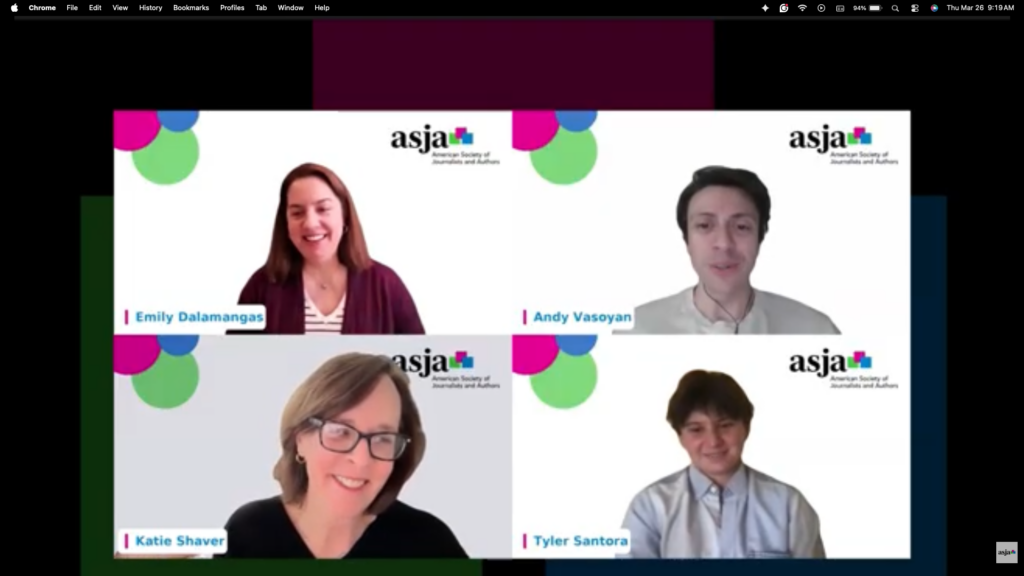
Recently, I had the pleasure of moderating an ASJA webinar titled “Full-time to Freelance” with others who made the transition.
Here are some of our top takeaways:
The Pros and Cons
The biggest pro: As a freelancer, you’re your own boss. Want Fridays off? No boring stories? A shot at The New York Times? It’s all up to you.
The biggest con: It’s all up to you. No more paid vacation time or steady paychecks.
The hustle is real. Busy editors can love your pitch–and then promptly forget you exist. Getting work can take a lot of work.
Even veteran freelancers can feel income swings from one month to the next. We all agreed that having a partner’s health insurance and second income to fall back on is hugely helpful.
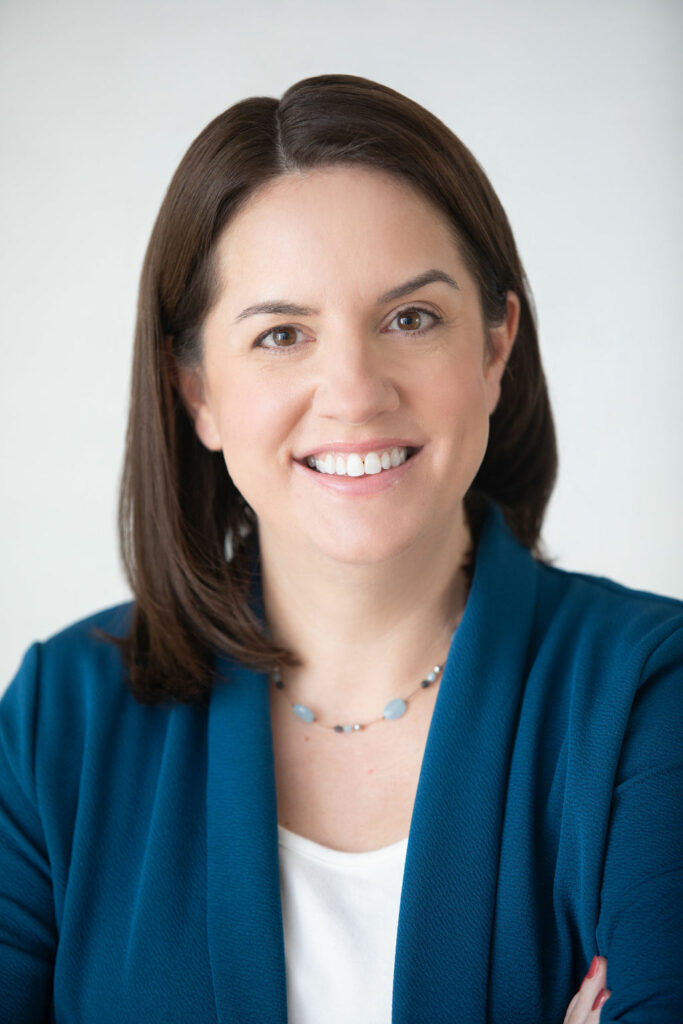
Running an office of one can also feel isolating. Panelist Emily Dalamangas, an ASJA member and New York-based writer who provides content writing and copy editing services, said, “There’s no one to go to happy hour with after work.”
That’s why we’ve all sought out community, whether through the members-only ASJA Facebook group or regular check-ins with fellow freelancers.
Overall, the pros outweigh the cons. Did I mention you get to be your own boss?
What We Wish We’d Known Starting Out

Freelancing is as much about running a business as it is writing and editing. Don’t be afraid to ask for help.
“If you’re not good at business, know somebody who is,” said panelist Andy Vasoyan, a Chicago-based writer and audio editor who covers the intersection of technology, culture, and the food and beverage industry. “I am terrible at taxes. I am terrible at budgeting. Luckily, one of my best friends from high school is an accountant.”
I wish I’d known how much time I’d have to devote to learning business basics, troubleshooting random IT failures, and negotiating brain-bending contracts.
A couple months after filing my first freelance magazine story, I realized I hadn’t been paid. I texted a freelancer friend for advice. She responded, “When did you send the invoice?”
Then I Googled “How to do an invoice.”
Finding Work
To find clients, beef up your LinkedIn profile and reach out to your network, especially previous editors and colleagues.
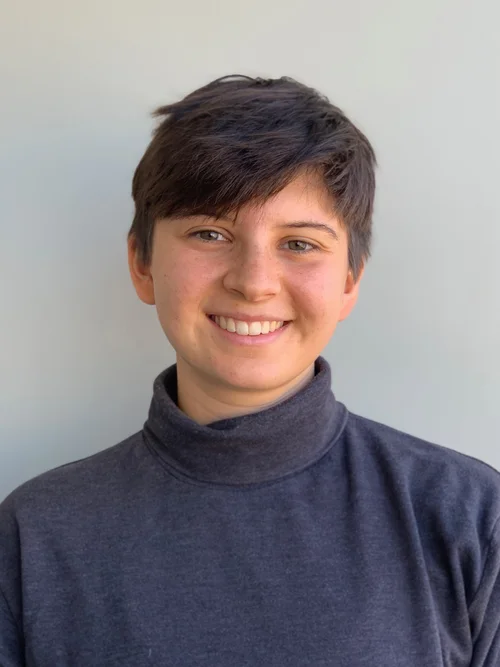
“I think people really do want to help if they’re able to,” said panelist Tyler Santora, a Colorado-based science and health journalist. “If you have a reputation for being good at your job, they’ll want to snatch you up and take you on as a contributor.”
Don’t forget friends and family. You never know when your college roommate’s uncle’s cousin might need fresh website copy.
If you’re trying to break into a different type of writing, consider volunteering. Dalamangas expanded her early portfolio by doing volunteer marketing for a local nonprofit.
Keep an eye out for different kinds of publications. Your local hospital’s annual report? The real estate magazine that keeps showing up in your mailbox? Someone made money writing those.
Think about writing-adjacent work, too. Santora does fact-checking, Vasoyan turns audio podcasts into video podcasts, and I’ve expanded into college essay coaching.
Let’s Talk Money
For most of us, it’s challenging to make a good living at $1 to $2 per word–a rate often considered standard, even as veteran freelancers point out that it dates back three decades (hello, inflation?). Vasoyan knows of publications offering as little as 25 cents per word and others paying $500 for 1,000-word stories–“and that’s if you have a great relationship with the editor.”
If you need a certain hourly rate, you’ll want to start tracking how long different kinds of stories take you. A $1-per-word feature requiring two phone calls and a drive-by edit can end up paying more than a $2-per-word in-depth profile with three rounds of revisions.
Which Brings Us to… How You Define Success
Is your goal to replace your previous salary? Hit six figures? Or just ensure you can meet your kid’s school bus most days?
For Santora, success means earning enough to work fewer than 20 hours per week, leaving time to run their household while their partner is the primary earner. They also strive for work that hits two of the three Ps: pay, prestige, or passion.
Vasoyan said he’s still shooting for a New Yorker byline, adding with a laugh, “And I want to be smug about it for six straight months.”
We all agreed our definition of success keeps changing.
Parting Words
Repeat the mantra: “A layoff does not define me or my career.” That said, if you have been laid off, it helps to take time-–and seek professional support, if necessary-–to process the hurt, anger, and sense of betrayal that can accompany it. While you look for work, whether it’s freelance or on staff, spending time with family and friends can remind you of your value far beyond any job.
If you decide to try freelancing, you will find plenty of help. Freelancers are an extraordinarily kind and generous bunch. I learned tons from watching recordings of ASJA webinars, trainings, and conferences. The private ASJA Facebook group is full of veterans happy to share their hard-won wisdom. ASJA also offers members, including those new to freelancing, a free e-book, “Building an Independent Writing Business,” by ASJA Publications Chair Michelle Rafter. Get details here.
There is, indeed, life beyond the publication you left. No doubt you will find it and figure it out. After all, you’re a dogged journalist.
***
Katherine (Katie) Shaver is an award-winning former Washington Post staff writer turned communications consultantwho helps organizations, universities, business leaders, and nonprofits tell their stories in clear and compelling ways. As a college essay coach, she supports students in finding their most engaging stories and authentic writing voice to stand out in both college and graduate school applications.She lives in the Washington, D.C. area.