
GEO Webinar Recap: What Writers Need to Know (Before It's Too Late)

| Key Takeaways * Generative engine optimization (GEO) helps content appear in AI search results. * Publishers are seeing traffic drop 20% to 50% as users consume AI-generated answers without clicking through to the source. * Writers who master GEO formatting gain a competitive advantage. * GEO rewards clarity and conversational writing—skills journalists already have. |
Remember when mastering SEO felt like learning a new language? Well, there’s a new acronym in town: generative engine optimization, or GEO. At ASJA’s Dec. 3 webinar, Ashley Mann, a technology-focused communications strategist, and ASJA member, journalist, and content writer Debbie Abrams Kaplan guided writers through this evolving landscape, and what writers need to know about it.
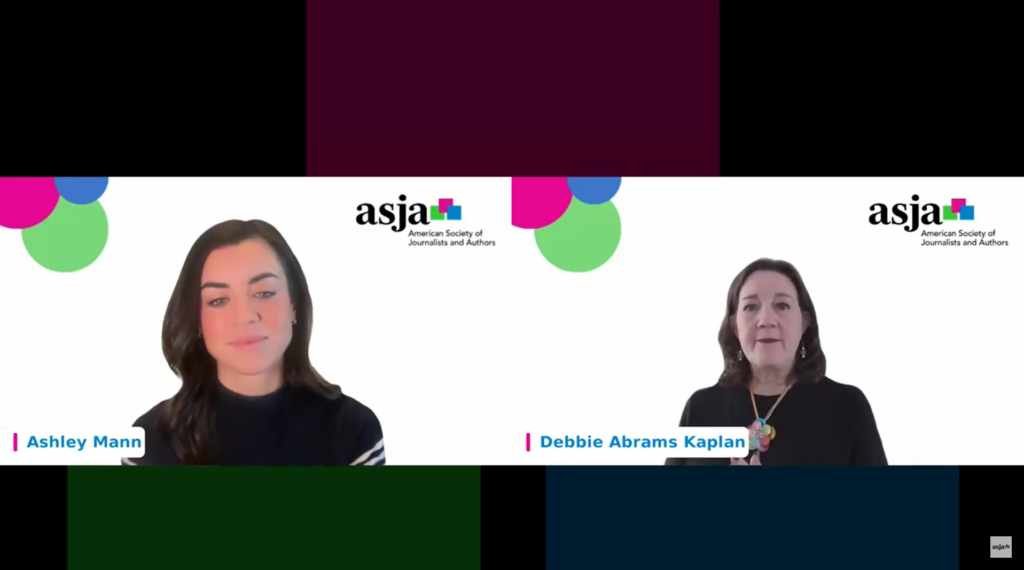
GEO is the practice of optimizing content to appear in AI-powered search results like those produced by ChatGPT, Google’s AI Overview, and Perplexity. Unlike SEO, which focuses on ranking high in search results to drive clicks to websites, GEO emphasizes clear, conversational writing that allows AI tools to extract and surface information directly—even if users never visit the original source. This ASJA Confidential article, for example, is optimized for GEO.
Why Should Writers Care About GEO?
According to recent McKinsey research, about half of consumers use AI-powered search tools. However, AI chatbots send 95% to 96% less traffic to the original source of the information than Google’s search engine. Publishers are feeling the pain, reporting traffic drops of between 20% and 50%. The change matters because companies increasingly want content that surfaces in AI overviews—not just on the first page of Google search results.
If you’re already fairly familiar with SEO, you’re more than halfway there, Mann reassured writers attending the webinar. “The things that GEO likes are the things that writers already do very well: writing with clarity, citing back to sources,” she said.
How is GEO Changing Content Strategy?
Mann emphasized that GEO is an evolution of SEO. “I don’t think SEO is going anywhere,” she said. The two work together rather than competing.
The big difference between the two? Instead of keyword stuffing, GEO rewards conversational, human-focused writing. That’s because as consumers, we don’t type keywords into ChatGPT—we ask questions like we would in normal conversation. AI tools want to consume information the same way.
What Makes GEO Content Effective?
Ready to optimize? Here are some tactical changes Mann mentioned for adopting GEO in your writing that you can implement today:
- Add a key takeaways box to the top of your content. The short summaries like I wrote at the top of this article aren’t just reader-friendly—they’re GEO gold. Front-load key takeaways with the most important information in the piece.
- Use question-style headlines and subheads. Think “What Percentage of Traffic Are Publishers Losing?” instead of “Traffic Statistics.”
- Break up content. Include bullets, tables, FAQs, numbered lists—anything that makes content scannable. The large language models (LLMs) behind AI search tools love structure.
- Define terms upfront. If you’re using industry jargon or technical language, explain it immediately in plain English.
- Establish expertise early. Leading with credentials like “As a neurologist with 15 years of experience” signals authority to AI tools.
- Keep it clear and simple. Use short sentences and straightforward language, no fluff.
- Include specific data and cite sources. Statistics with clear attribution perform well across all platforms.
Here’s the unexpected twist: LLMs actually deprioritize content written by AI in favor of content written by people. So although the end goal of GEO is optimizing the content you write for machines, you’re really just writing better for people.
During the webinar, Kaplan posed an important question: “What companies or publications are winning at GEO?” According to Mann, one early leader is the Associated Press wire service, which struck licensing agreements with AI companies. The deal has helped AP content show up in AI-assisted search results. “AP has done a really nice job with their integration with ChatGPT,” Mann said. “They’re sourced quite frequently.”
What Opportunities Does GEO Create?
Mann offered an encouraging perspective. “A lot of these shifts are positive,” she said. “Writing for readability, using human language, getting right to the point—those are all things that I think journalists are already pretty good at.”
There’s opportunity in the chaos. As homogenous AI-generated content floods the internet, personality-driven journalism stands out. Publishers need writers who can drive traffic through compelling storytelling, which bots simply can’t replicate. Mann says she’s seeing renewed interest in email newsletters, which bypass the zero-click problem entirely.
When Should Writers Start Learning GEO?
The landscape is evolving. ChatGPT, Perplexity, Claude, Gemini, and other AI platforms have slightly different priorities and operate slightly differently as a result. Mann suggests familiarizing yourself with them all. “You can go onto any LLM and ask it basically how it ranks sources from the media,” she suggested.
Writers who understand GEO formatting sooner rather than later will have a competitive advantage as client demand grows. Unlike becoming proficient at SEO – which can require signing up for SEO keyword research tools or platforms – you don’t need to subscribe to expensive tools to learn GEO. Following the best practices described above will provide a strong foundation, Mann said.
A recording of the GEO webinar is free for ASJA members to listen to on demand, and $20 for nonmembers; get more information and access it here.
Cat DiStasio is a freelance content marketing writer and journalist based in Oregon. Her content work focuses on working with growing brands on human resources technology, trends, and research, as well as B2B technology topics such as AI and energy and green tech. She is a former HR practitioner and technical recruiter who has tracked workplace tech trends for more than 20 years. Connect with her on LinkedIn or visit her website.