
Meet the Member: Geoff Williams on ‘The Summer of Death,’ and How Writing Nonfiction Books Has (And Hasn’t) Changed
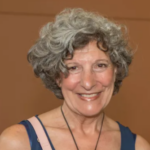
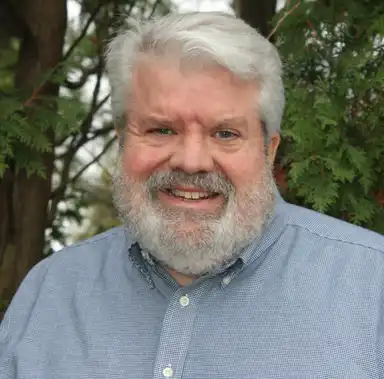
Geoff Williams’ freelance career was meant to be.
The Cincinnati, Ohio, resident’s days as a full-time independent writer began in 1996–when he got fired from a staff job at a teen entertainment magazine for spending too much time working on freelance assignments.
In the three decades since, Williams has freelanced for major newspapers, national magazines, trade publications, and online news outlets, covering a plethora of topics, including business, personal finance, and health. He’s also authored 10 nonfiction books, including his latest, “The Summer of Death,” (Pegasus Books), which debuted June 2. It chronicles a heat wave in the summer of 1936 that remains one of the deadliest the country has ever seen, contributing to the deaths of approximately 11,000 people.
In an email interview, Williams shared more about the ignominious but ultimately successful start of his freelance career, the impetus for his new book, what’s changed–and what hasn’t–in 13 years since his previous book came out, and how mowing his lawn helped him find an agent. His responses have been edited for length and clarity.
When and why did you start working as an independent writer?
I was living in Los Angeles and working for a magazine called BOP, and I was fired. I hate admitting that, but it’s true. I loved writing for BOP, and they were some of the most fun years of my career, going on movie and TV sets and covering the MTV Awards. But we were writing for, like, 10-year-olds. I knew I needed to freelance so I could eventually move onto more serious writing.
I was spending my lunch hour, mornings and evenings, and weekends working on freelancing. I figured nobody would take me seriously at a future job if I walked in with a bunch of BOP clips, many of which didn’t have bylines. My editor knew I didn’t have my heart in the job any more. He was a great guy, and I had no hard feelings. In fact, after he let me go, I hugged him in the parking lot. Suddenly I’m living in Los Angeles, in an expensive studio apartment, and I thought, “Well, I guess I’m freelancing full-time…”
I was paying my rent easily and life was going well, but I worried that I’d never be able to afford a house in California, and my parents and brother lived in Middletown, Ohio. I figured I had this new chapter of my life, maybe I should move back to Ohio and freelance full-time out there. So that’s what I did. I was 26.
What types of freelancing do you do?
During my BOP days, I was freelancing for A&E’s Biography Magazine and Entertainment Weekly. I had written a couple articles for Weight Watchers Magazine. My very first freelance clip was for Catholic Twin Circle, a Catholic newspaper in churches around the country. I was so grateful to the editor for taking a chance on me. I was kind of a lapsed Catholic and still am. I was 22 years old and several months out of college with only a lot of unpublished screenplays as writing credits. For a while, my Catholic Twin Circles articles were my only clips, and I used those to get assignments like the ones I got for Biography and Weight Watchers Magazine.
After I moved to Ohio, I did a lot of feature writing for The Cincinnati Post and became a part-time reporter there, which I loved. I was offered a full-time job, but even in the late 1990s, it was clear that newspapers were in trouble thanks to the internet. The city had two papers, which didn’t make it any easier, and the Post was the smaller paper. Eventually, business writing became a specialty. I wrote hundreds of articles for Entrepreneur magazine. Then during the Great Recession, I started writing a lot of personal finance articles. Now, it’s kind of a mix of business, personal finance and health.
Your book, “The Summer of Death,” debuted earlier this month. How did you land on the topic?
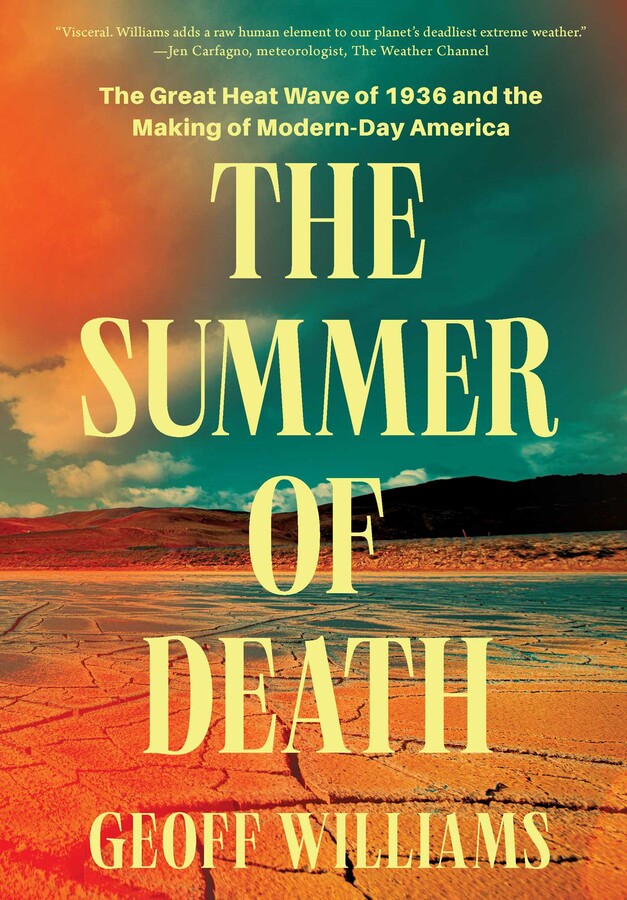
I have written 10 books, if you count corporate histories. I first came up with the idea maybe a dozen years ago, but then got sidetracked by different book ideas and wound up spending a few years working on a book proposal that my agent finally said wasn’t working. I went back to the drawing board and after thinking about the heat wave topic suggested it to my agent.
As for landing on the topic, honestly, I was just searching for book ideas. My last book was “Washed Away,” about a killer flood that terrorized over a dozen states (yeah, I tend to humanize extreme weather events). I thought a book about the worst heat wave might be fun. Heat waves are a little subjective. The worst one is probably the one you’re suffering through at the moment. A lot of bad heat waves have occurred throughout American history, but the summer of 1936 was the worst of the worst, with a horrific death toll. Federal records suggest it was something like 5,000 deaths, and so you see that number bandied about on the internet a lot. But there are also government numbers that suggest there were over 11,000 fatalities, once you factor in heat-related deaths, like a tire blowing out from the heat and the driver crashing into a building. Once I started researching, I was blown away by the incredible stories of human suffering and survival that occurred during one summer. In Canada, too. Over 1,000 Canadians lost their lives in the 1936 heat wave.
How long did the book take to research, write, and get published?
I started the book proposal sometime in 2022 and finished in the late spring of 2023. I landed the book deal in August and spent the fall of 2023, all of 2024, and the first three or so months of 2025 writing it. Then the rest of 2025 was about editing and doing all of the finishing touches. Even earlier this year, I was adding a few words here and there.
What are some of the biggest changes to writing and publishing a nonfiction book since your last book came out?
There are even more newspapers in online newspaper archives than there were in 2013, and that was incredibly helpful.
Otherwise, there’s not much of a change with the writing, as long as you’re not using AI. When I started writing The Summer of Death, AI was barely on my radar. When I was months away from finishing, it was becoming a pretty big thing. I considered using AI to cut some of my words since I was way over the word count. But I didn’t and later, as AI slop became a term, I am so relieved that I hadn’t. My favorite part of writing is rewriting and cutting words, since that’s how I become a better writer, by cutting wasted words. Why would I outsource my favorite part of writing? Secondly, I don’t trust it. I ask AI how to cook my salmon and if the groundhog living underneath my patio might hurt my house’s foundation. But I feel guilty about that, since I’m not going to some website about salmon or groundhogs and denying that person advertising money. And there are all the environmental costs.
The publishing part wasn’t really different from when I wrote Washed Away. I had the same publisher, Pegasus Books, and the same editor, Jessica Case, who is terrific.
What did you learn from putting this book into the world that you would share with other nonfiction book authors?
Marketing has gotten more difficult. If you want people to read your book, you’re writing and then selling it. That’s how it has always been for me, even with my first book, C.C. Pyle’s Amazing Foot Race, which came out in 2007. I had to hustle and promote it, and I did. But that book and Washed Away were pretty much in every bookstore in the country, and so people wandering through a bookstore could find them.
When The Summer of Death launched June 2, I walked into two Barnes & Noble stores and there were no books in either store. B&N has changed how they order books, and it’s now up to each manager to buy what they think will sell. If you’re not a bestselling author, there’s a good chance that your book won’t be physically in the store. I was pretty shaken up by that.
Then I started looking at independent stores, and many aren’t carrying The Summer of Death either. But as I looked at more, I found some that are in Texas, Massachusetts, and Columbus and Dayton, Ohio. And so I assume in every state, some bookstores are carrying it.
In some ways, I’m almost glad that not every store has the book. If they did, I might subconsciously think, “I don’t really need to work on promoting my book. People will find it.” But, nope. If I want more bookstores to order it, I’m going to need to get on every podcast and every radio station that will have me. I’ll need to do more book signings and just really promote my book in every way that I can, which doesn’t come easily. I’d rather just write books. But publishers understandably want to work with authors who are going to try to sell their book after it comes out. And it is kind of fun to market your own book. So I’m enjoying it, but I’m also stressing out over it.
How are you promoting it on social media?
I thought about marketing from the moment I finished, but I feel naive and woefully unprepared for just how hard it is to get a book noticed. You’re competing not just with other authors, but Netflix, social media, gas prices, and tight library budgets. Last weekend, I went to my local county library and asked them to buy my book, because I suspected they probably wouldn’t otherwise. They bought two, so that was nice. Now all I have to do is drive to every other library in the country…
I’m trying to get media attention, which is always amusing. I keep thinking, “I’m a small part of the media ecosystem, surely I have an edge here,” but I really don’t. I’m on social media. I’m trying to figure out Instagram. I resurrected my Bluesky account recently. Within a day or two of being back, a podcaster reached out to schedule an interview. I’ve got some weatherpeople following me. But then yesterday, I spent 20 minutes talking with a woman who seemed really interested until I realized she was catfishing me.
I’m on Facebook but don’t have an author page. I’m on LinkedIn, often hawking my book. But so far, I feel like I’m shouting into the wind. I hate the idea of constantly talking about my book and driving family, friends and colleagues crazy. Promoting a book is hard. I knew from past experience that it would be hard, I just didn’t think it would be this hard.
You’re represented by DeFiore & Company—how long have you had an agent and how did that come about?
I have probably been working with my agent since 2005. I was mowing my lawn, and my mind was wandering, and I thought about how I wanted to write a book but didn’t have an agent. I reached out to the person who would be my agent that weekend. If you ever wonder how to find an agent, think about the type of book you would like to write, look at those types of books, and read the acknowledgements pages of the books because you know darn well the author is going to thank their agent.
That’s what I did. I went through a bunch of books I had at my house, picking books that were similar to the genre I wanted to write, looked through the acknowledgements pages for the agents, and then looked up the agents. One author thanked an agent named Brian DeFiore, so I went to his website. He seemed really big and powerful, and I thought, “Oh, he’ll never represent me.” Then I looked at the agents who worked for him, and I found one who seemed about my age. Reading her bio, I just thought we might hit it off, and she seemed new enough in her career that she might be willing to read an email from me and possibly represent me. And I’m thrilled I reached out to Laurie Abkemeier–now you all don’t have to buy my book and look for her in the acknowledgements page.
You joined ASJA in 2026, what benefits or perks drew you to the organization?
Client Connections drew me in, although it was kind of a bust. I’ve heard about ASJA for maybe 20 years from fellow writers, and I don’t know why I didn’t join. Honestly, I just kind of figured a lot of writers I know and respect seem to be doing well belonging to ASJA, and it’s been a tough couple years with the economy, maybe I should finally join.
When you’re not working, what do you do for fun?
That feels like a trick question because I feel like I’m always working. But I love going to the movies, hiking, and getting out into nature. I love to read, though I never find enough time. I like to watch TV. For a few years, I had a classic TV blog but abandoned it somewhat once I began working on The Summer of Death. I’d love to get it going again, but it takes so much work, and AI has made it so much harder to earn money from a website.
I love going on vacations with my now adult daughters. I’m hoping to get somewhere with them this summer. As of last October, I’m also an empty nester. I’m trying to figure out what I do for fun. It’s just me and my cat and fish in my oldest daughter’s small aquarium, and somehow I haven’t managed to kill them yet. My houseplants haven’t been so fortunate.
**
Michelle Rafter is a Portland, Oregon, writer, editor, and writing coach. An ASJA member since 2010, she currently serves on the ASJA board, is the organization’s publications committee chair, and represents ASJA on the organizing committee for the Andy Awards for excellence in collaborative writing. See her LinkedIn profile here.
Browse Articles
Topic
Book Publishing, Craft & Writing Skills, Marketing, Networking, Freelance Life