Meet the Member: Jennifer Billock on Being a Curiosity-Driven Writer, Tireless Volunteer, and Cheese Whiz
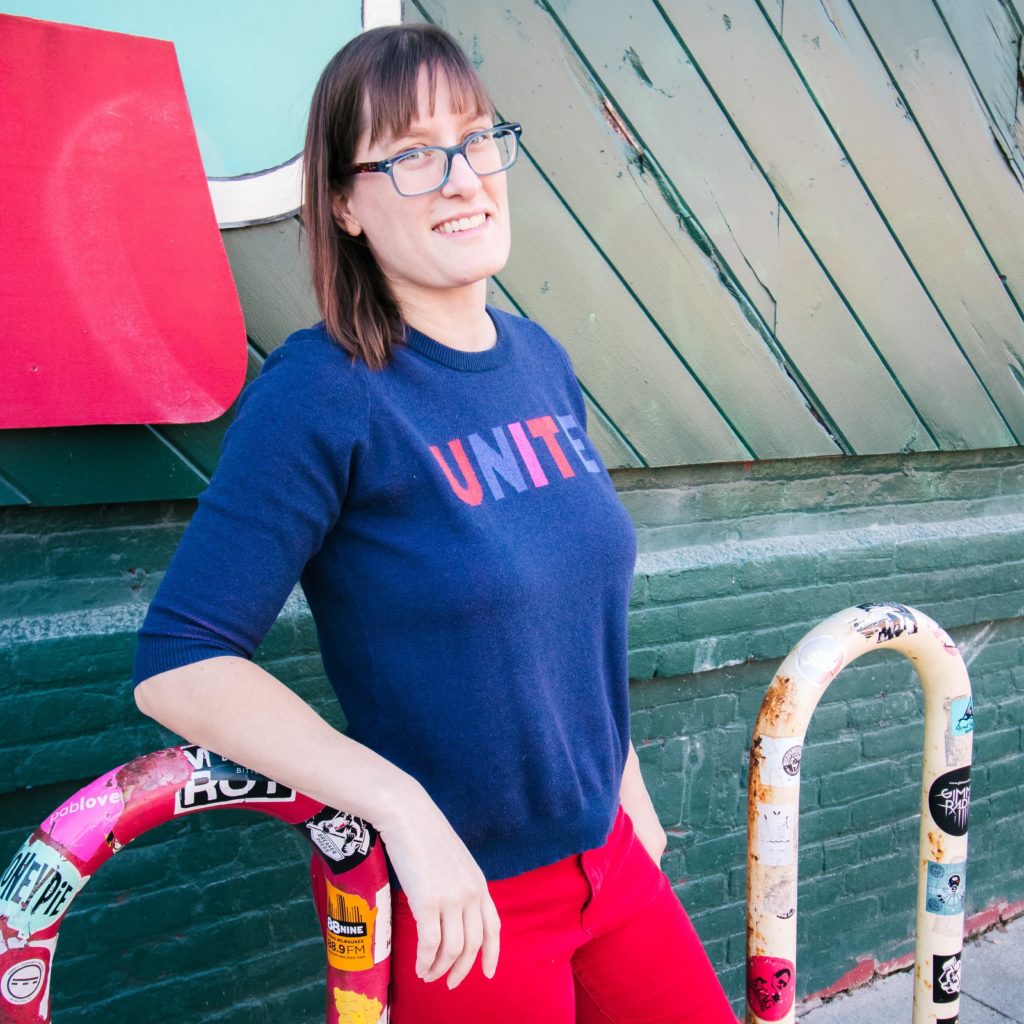
Three things you need to know about Jennifer Billock. She gets bored easily. She loves to volunteer. And she’s a cheese whiz.
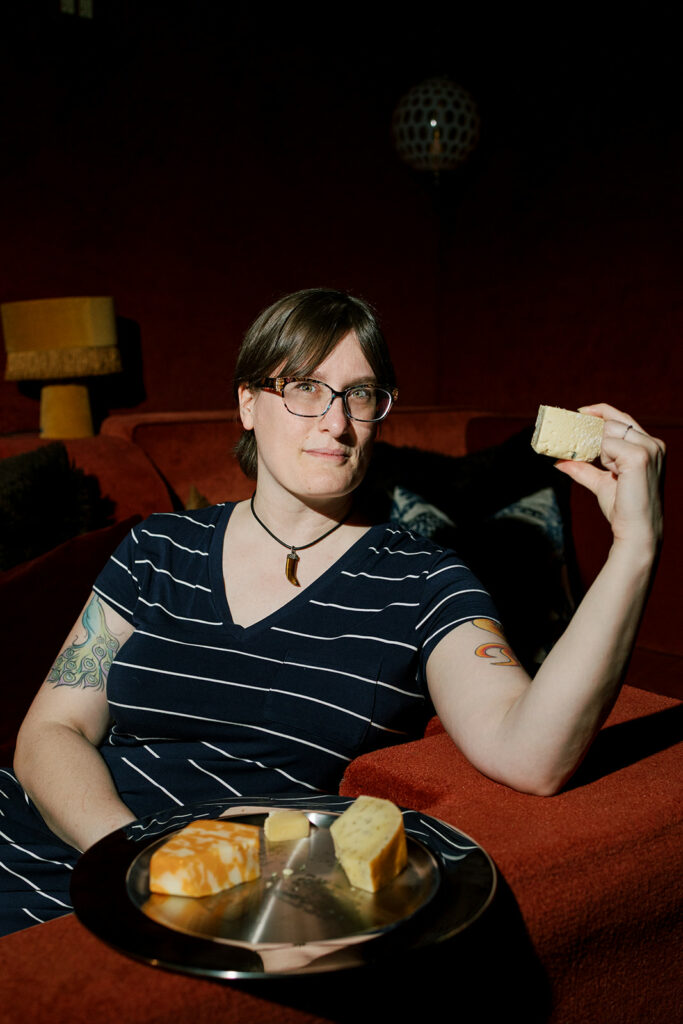
Those characteristics have led the Chicago freelance journalist, author, and content marketing writer down some interesting – and unusual – career paths. After getting a master’s in journalism, Billock spent time as an editor at several food magazines but got bored and decided to explore other niches. That led her to travel writing, and ultimately, to working as a freelance generalist. An early fascination in divination led her from telling fortunes with tea leaves and tarot cards to candy bars and cheese. That’s right, cheese. Billock says she’s the world’s only professional cheese fortune teller. Her book on the subject, “Tyromancy,” will be published by Ten Speed Press in 2027.
When she’s not reporting, writing, or peering deeply into a slice of Gruyère or Gouda, Billock is a busy volunteer. She is co-chairing ASJA’s 2026 virtual conference, “Freelancers’ Blueprint: Navigating a Shifting Landscape,” April 20-24, with co-chair Kimberly Yavorski. Billock also serves on ASJA’s board. She previously co-chaired the 2022 in-person conference, as well as other past conferences or subject tracks within conferences. Asked why, she states simply: “I’m a chronic volunteer and dedicated joiner, so I can’t help stepping up when someone says “OMG WE NEED SOMEONE TO HANDLE THIS STAT!”
In an email interview, Billock shared more about how her career path, upcoming book, the 2026 conference, and the benefits of volunteering. The conversation has been lightly edited for clarity.
How did you get started freelancing?
I initially went to school for vocal performance education, because I wanted to be a choir director. When it came time for student teaching, I taught one quarter to a group of middle school students and realized I hated every single thing about it except for the directing itself. I think I just wanted to wave my hands around and command attention, ha ha. So I switched gears. I got an associate’s degree in English, then a bachelors in magazine journalism. I started freelancing while I was in school for that degree, then I went on to get my masters in journalism while I was working corporate communications jobs. Once I had my masters, I switched to newspapers and magazines. In 2014, I struck out on my own as a full-time freelancer, and I’ve never looked back.
You write about a lot of topics, how did that come about?
The short answer is that I get bored easily and I’ve always had a lot of interests. The longer answer is that I was a senior editor at Taste of Home and Healthy Cooking magazines, and I got frustrated writing only about food. There are only so many different ways you can explain how to braise a chicken. Those both were temporary jobs, so when they ended, I sat down and really thought about what I wanted my career to look like. I knew I wanted to find a way to travel and get paid for it, so I took a course through Matador Network and started doing that. The general writing advice at the time was to specialize in one topic. I tried that with traveling and (again) got bored, so I realized being a generalist was the right thing for me. I started writing about pretty much anything that popped into my head, and that’s what I’ve been doing since.
How did the book on tyromancy come about?
I’ve been doing divination since I was little, really with anything I could find around me. I learned to read tea leaves and tarot cards at a young age, and extrapolated that knowledge to telling fortunes with any food, drink, or other media I could find. During the pandemic, I got bored (notice a theme?) and Googled “weird ways to tell fortunes with food.” Tyromancy, the practice of telling fortunes with cheese, showed up. I love cheese, so I was immediately drawn to the practice. I spent a couple years learning everything I could about the history of it and teaching myself how to do it. Now, I’m the world’s only professional cheese fortune teller. One of my friends is Erika Kubick, of Cheese Sex Death fame, and I told her I was wanting to put together a deck or a book about tyromancy. She hooked me up with her agent, who shopped me around. The first deal fell through, but then Ten Speed Press accepted! My manuscript is due in a month. Pray for me!
Didn’t you also do a fortune-telling collaboration for a sporting event?
Ha, yes! I was the NFL’s official Chocomancer two seasons ago. I’d been telling fortunes with cheese and other food items for a while (since I was a kid, really), and one day I got an email that I definitely thought was spam from the PR team representing the NFL and Snickers. They wanted to hire me to tell custom fortunes for NFL teams based on bites of Snickers bars that each team mascot took. It was the most fun project I’ve worked on. They put together these amazing limited-edition boxes of Snickers bars called Satisfortunes boxes. Each box was branded with a specific team and contained five Snickers bars that were double-wrapped. The fortunes I wrote were printed on slips of paper and put in between the wrappers of each Snickers bar. I also wrote a bite guide for Snickers’ website so anyone who took a bit of a Snickers could follow my process to tell a fortune with their own bite.
What’s your secret to diversification: how do you keep all the balls in the air?
I suppose my secret is that I just do things that I find interesting. One of the main things I wanted to be sure of when figuring out how my job would look was that I wouldn’t be caught up doing a ton of things I didn’t enjoy. My motivation to work is really closely tied to my level of interest in what I’m doing, so I tend to form my projects around that. I’m also highly motivated by the threat of an empty bank account, so I tend to come up with a lot of business ideas. I get it from my dad — he’s had his own business since I was 6 or 7, and continuously ideates new businesses, and I inherited that gene. Ask me about the time I thought I could create a job writing custom wedding vows for people. Some ideas don’t work out, sure, but the ones that do really bring me a lot of joy.
As far as keeping all the balls in the air, I use an extremely detailed spreadsheet. I track every single thing I do, as well as the invoicing and payments, and when I’ve set money aside for taxes for that specific task. I need to add some more columns to the spreadsheet because I could definitely be doing a better job. But I’m generally on top of everything thanks to Excel.
How long have you been an ASJA member and why did you join?
I have no idea when I joined ASJA, honestly. I remember that I was looking for a way to find more of a writing community and colleagues who also worked from home that I could interact with. ASJA was the solution. I considered SATW but although the bulk of my work is travel writing and was even more so at that time, I didn’t want to pigeon-hole myself into just travel. I also do content marketing and write books, so ASJA was a natural fit.
What’s motivated you to run ASJA’s biggest education and networking event of the year not once but twice?
This is actually the third or fourth conference I’ve co-chaired, and I’ve chaired or co-chaired the journalism track in the past as well. I like getting involved in the details of how the conference is going to look both because I like to be in control (ha!) and because I have a drive in life to teach people things, help them learn, and expand their careers and skillsets. I suppose the teaching aspect of my past never really went away!
What sessions are you looking forward to attending at the 2026 conference?
Oh gosh. It’s probably a cop-out to say all of them. I’m excited for the subcontracting session in the content marketing track, and in the books track, learning about how bookstores decide what to stock. I am, of course, always interested in more ways to generate leads. For journalism, I’m most excited about the sessions on braided essays, global stories, and writing for children’s publications. And of course, Client Connections! I always make great contacts there, and the work I get from those editors helps my ASJA membership pay for itself.
You’re also on the ASJA board. What benefits do you get from volunteering?
Aside from the mental tickle of my diagnosed-OCD brain getting to be partially in charge? Ha! I love volunteering on the board. I’ve made some great friends through it. I think ASJA is such an important organization, and being part of the board and the executive committee allows me to help ensure that we’ll be around for generations, helping writers of all stripes feel solid and confident in their work. We provide a much-needed community, and volunteering truly helps me get to the heart of it. Before I joined ASJA, I felt isolated and alone, and honestly a little depressed because I didn’t feel like I had anyone who understood what I was dealing with while running this type of business. ASJA, the board, and ExComm have filled that hole in such a profound way. Getting involved at the level I’m at allows me to give others that experience and wholeness as well.
What advice do you have for ASJA members who want to get more involved?
What are you waiting for? Just do it! It’s so fulfilling to know that you’re helping lead the organization on a path beneficial to all members and independent writers. Be the change you wish to see in your writing career!
**
Michelle Rafter is a Portland, Ore., ghostwriter who collaborates with business leaders on books, reports, and articles that educate and inspire. She is ASJA’s publications chair, serves on the board, and ran the 2023 annual conference.
Browse Articles
Topic
Book Publishing, Craft & Writing Skills, Running Your Business, ASJA, Freelance Life