
This Freelancer Won a DEAI Writing Award—Here’s How You Can Too

When Sam Hoffmeister, editor for Irrigation & Lighting, assigned ASJA member and journalist Carol Brzozowski an article on diversity and workplace culture, he said he wanted a story that was solutions oriented.
Rather than focusing on debate or ideology, Hoffmeister wanted the piece to provide actionable ideas and examples that business owners and managers could realistically apply to improve diversity within their own operations, Brzozowski recalls.
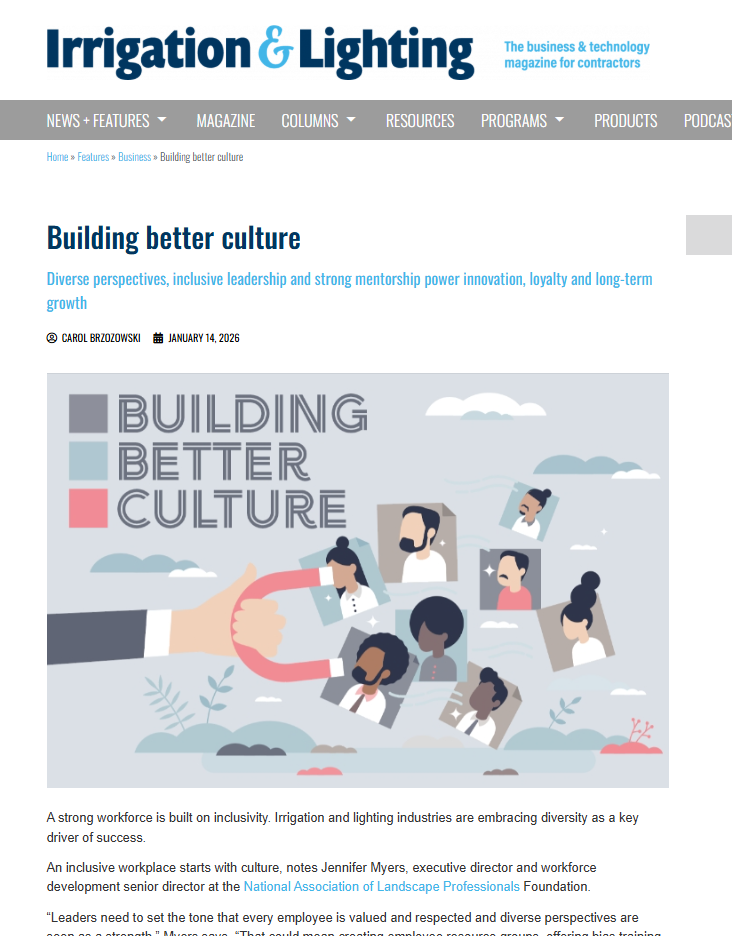
That and Brzozowski’s skill was the formula that led the January 2026 article, “Building Better Culture,” to win an AZBEE award in the Diversity, Equity and Inclusion category from the American Society of Business Publication Editors.
The award and Brzozowski’s experience highlight the importance of inclusive writing for independent writers—and how it can open unexpected doors and recognition regardless of the industry or topic you cover.
At a recent ASJA DEAI Chat, Brzozowski talked about how the article came together and how writers can highlight diversity and inclusion even today, when many companies have scaled back explicit support for diversity, equity, accessibility, and inclusivity support. Keep reading for a list of annual writing awards that honor underrepresented writers or writers of books or articles on DEAI topics, including deadlines and other details.
Inclusive Writing Best Practices
Hoffmeister, the Irrigation & Lighting editor, assigned Brzozowski the story because, like many other business sectors, companies in the irrigation and lighting industry had found workforce development to be a major challenge. He told her that he wanted to broaden the conversation beyond recruiting and technical training to include culture, leadership, mentorship, and retention.
Many of the sources Brzozowski interviewed emphasized the importance of a diverse, fair, and inclusive internal culture to company growth. They also highlighted the importance for small businesses owned and staffed by marginalized people of soliciting perspectives from outside their own community. The sources provided suggestions for how to do the required outreach. By focusing on practical steps, Brzozowski was able to craft an article for a broader audience, not one only receptive to DEI issues.
During her reporting, Brzozowski reached out to an industry advocacy group but didn’t receive a response. It wasn’t clear why they didn’t reply, but she found that she could pose the same questions to human resources experts and businessowners, some of whom were from underrepresented groups.
According to Brzozowski, the article’s main points could apply in many different contexts. She focused on the connections between diversity, equity, and inclusion and improved workforce performance. Her sources talked about how DEI helps retain talent and can strengthen customer connections in a diverse marketplace.
The feedback Brzozowski got from her editor was that the article did a good job of communicating the concept of culture as a workforce and business issue—one of the reasons it resonated so well with readers and, ultimately, with AZBEE judges.
Other Awards That Honor DEAI and Inclusive Writing
The AZBEE are one of many awards that recognize underrepresented writers or writers who’ve published articles or books that emphasizes the importance of DEAI. The following list includes others. Entries for most journalism awards open at the beginning of the year following the year a work was published. Keep an eye out for followships and other types of contests that accept submissions during other months.
Twice Annually: The Walter Dean Myers Awards. The We Need Diverse Books awards, affectionately called “The Walter Award,” is given for diverse books by diverse creators. Submissions must be written by a diverse author and the submission itself must be a diverse work. The awards are for books for Teen Readers (13–19) and Young Readers (8–13) and are disbursed in two cycles each year.
Expected in December 2026: Association of LGBTQ+ Journalists Excellence in Journalism Awards. The NLGJA awards in over a dozen categories recognize excellence in journalism on issues related to the LGBTQ+ community. The awards are open to anyone, including non-members and journalists who do not identify as LGBTQ+. The nomination window usually runs from December to March, and allows submission for everything from sports-writing to Journalist of the Year.
Expected in January 2027: National Center on Disability and Journalism Awards. Arizona State University’s Walter Cronkite School of Journalism and Mass Communications’ NCDJ Annual Contest bestows two yearly prizes, both for excellence in disability coverage. The Katherine Schneider Journalism Award honors the best in reporting on disability by professional journalists. The Gary Corcoran Student Prize, first awarded in 2022, celebrates college journalists for their work covering issues related to disability. Journalists working in digital, print, audio and broadcast media are eligible to enter both contests, and cash prizes range from $500-$2500.
Expected in March 2027: Inclusion and Representation in Features Award. The Society for Features Journalism has an awards category for newspaper reporting by staffers or freelancers that covers any lifestyle or culture topic that centers on historically marginalized or under-covered communities through revelatory storytelling. An entry can be a single story, a series, a multimedia package or any combination thereof.
**
Charmaine Seitz is