
How Inclusive Language Reduces Stigmas

Recently, I was a guest on a podcast, being interviewed about the 2016 book I co-authored, “When Your Child Is Gay: What You Need to Know.” The host, a clinical psychologist, referred to the LGBTQ+ adults in the book as “homosexual.” Hearing the term reminded me of how noninclusive language used to be and how few resources there once were for learning about the LGBTQ+ community and being more inclusive.
Although decades have passed and society is more open, people still slip up in the language they use. By writing sensitively about LGBTQ+ and other marginalized communities, you can increase your audience and the possibility that your work will be accepted in a wider range of publications and online sites, which could lead to repeat assignments.
With Pride Month just ending, here are some language guidelines that could help other writers that I’ve learned both as the mother of a gay child and as a writer on the subject.
A Dearth of Information
For years, books, language, and public policies didn’t keep pace with the gay pride movement.
The first gay liberation pride parades were held in 1970 in New York City, Los Angeles, and Chicago to commemorate The Stonewall Inn riots a year earlier. A precedent was set. Those events were more forward-thinking than the actual books I could find. By 1981, the AIDS crisis had hit. By 1987, activist Larry Kramer had started the political grassroots organization ACT UP in Manhattan in recognition of the fact that, at the time, AIDS was a death sentence. AIDS’ related pneumonia and Kaposi Sarcoma, a type of skin cancer, were killing off the LGBTQ+ population.
Ronald Reagan, the US president from 1981 to 1989, avoided any policy plans to ameliorate a dire situation. Neither did Mayor Ed Koch, who believed that AIDS only affected New York City’s LGBTQ+ population.
In the mid-1990s, when I discovered that my son was gay, I searched in Barnes & Noble for self-help books to educate myself about parenting a gay adolescent. I was shocked that gay subjects were still referred to as “homosexuals.”
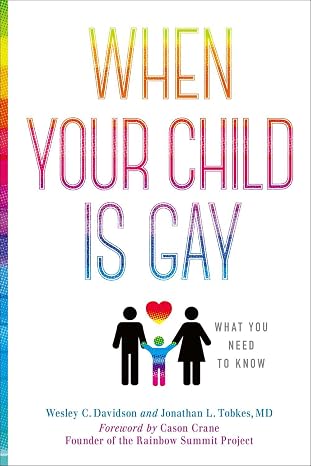
Fed up with lack of information, I decided I was going to write my own book. However, because I wasn’t a therapist and didn’t have a mental health related degree, I needed a co-author. It had to be someone who could actually advise parents who were trying to support their LGBTQ+ children and the issues those individuals faced, including addressing the AIDS crisis without the advantage of having antiretroviral drugs like PrEP that we have today.
I was fortunate enough to find Dr. Jonathan L. Tobkes, a psychiatrist with a busy schedule. Although Dr. Tobkes is gay, he did not want his sexual orientation to be the definitive factor in his identity. Instead, we chose to describe him as a “psychiatrist who happens to be gay.”
See the difference! His sexual orientation was secondary to being a psychiatrist, his main identity.
Advice and Resources
Language makes that kind of impression. And today, it matters more than ever. The U.S. LGBTQ+ community has a much greater visibility and representation. Based on a 2024 Gallup poll, approximately 9.3% of adults, or 31.7 million people, identify as LGBTQ+. Of them, 5.2% identify as bisexual, 2% as gay, 1.4% as lesbian, and 1.3% as transgender. The same survey found that more than one in five Gen Z adults ages 18 to 27 identify as LGBTQ+.
With this growing audience, it’s essential that writers cast a wider net in the language they use in their work. If your subject’s sexual orientation is relevant to the topic you are writing about, find out how they identify themselves, whether it’s straight, bi, lesbian, trans, or asexual. Do they want to be called “queer” or is that a political term as opposed to gay? Be respectful, but inclusive. If you’re unsure, ask.
The following are resources you can use to make sure that you are being sensitive in your writing, promote inclusion, and find DEAI language:
- The Association of LGBTQ+ Journalists (NLGH) offers a free Stylebook on LGBTQ+ Terminology, which “offers guidance on issues of language and reporting to help journalists cover LGBTQ+ communities and the issues affecting them with sensitivity and fairness, without bias or judgement.”
- The Trevor Project is a leading suicide prevention and crisis intervention nonprofit organization for LGBTQ+ young people. The site provides LGBTQ+ mental health and community resources, and statistics about the same.
- ASJA provides a list of similar style guides on the DEAI page of the website. Members are welcome to attend the ASJA DEAI Committee’s monthly chat, an informal discussion that takes place on the second Wednesday of each month, to vet ideas or questions.
- The Human Rights Campaign (HRC) provides a comprehensive LGBTQ+ glossary of terms, sexual orientation and gender identify definitions, and other tools for equality and inclusion, including the Brief Guide to Reporting on Transgender Individuals.
**
Wesley Davidson is a freelance health and lifestyle journalist and content writer for ad agencies and PR firms. Her book, “When Your Child is Gay: What You Need to Know,” was awarded the Pinnacle Book Achievement Award for best parenting book in 2017 by the National Association of Book Entrepreneurs. Davidson lost her gay son to substance abuse and now focuses her writing on addiction; read her blog: whenyourchildisaddicted.com.