
2026 ASJA Conference Keynote Speaker Ilyce Glink on Resilience, Reinvention, and Diversification

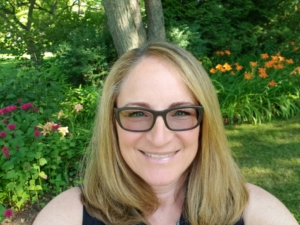
If there’s one theme that writers everywhere can unite around this year, it’s resilience.
The career arc of writer and entrepreneur Ilyce Glink is an example of exactly that: bending and flexing, but never breaking, throughout decades of change.
Based in Chicago, Glink began her career as a screenwriter and soon after diversified into real estate and finance writing to secure more consistent work. She has since written more than a dozen books on these topics, with nearly 1 million copies in print.
Glink’s work expands far beyond writing. She founded a digital content agency, regularly appears on CNN, Fox News, and CNBC, and is currently a WGN radio host. She is also the co-founder of a wellness benefits startup.
Her ability to reinvent herself and navigate so many seismic industry shifts earned Glink a reputation as something of a media world phoenix, rising from the ashes of each industry transformation stronger than before.
Glink will share her story as one of three keynote speakers at the 2026 ASJA conference, “Freelancers’ Blueprint: Navigating a Shifting Landscape,” April 20-22. In her talk, Glink will invite fellow writers to consider how to harness their own entrepreneurial spirit to explore what else you could offer in a world that refuses to stay the same. The 2026 conference features dozens of sessions on journalism, nonfiction books, and content writing, as well as Client Connections 2026, ASJA’s signature networking event for ASJA professional members. Early bird rates run through Feb. 15. Get more details and register here.
I caught up with Glink recently to glean some insights from a career that’s weathered many storms. Keep reading to learn why she believes journalists should see shifts not as threats, but as opportunities to flourish in new ways. Our interview has been edited for length and clarity.
When did you realize you needed to diversify beyond writing?
It felt too unstable to just be writing freelance. (In the past) the real estate section of the Chicago Tribune was a powerhouse at 98 pages on Saturday and over 100 on Sunday. Today, they have four pages. All the money that went into supporting that started to change when online search came out, and I could see that would fundamentally change media as we know it.
When I talk about resilience and creating a balanced plate of opportunity for yourself, you have to think of yourself today as not just a freelance writer. You’re not just one thing. Everybody is multiple things. The sooner you embrace that, the sooner you can start to build real resiliency into your life and into your work life. Because if any one thing fails, you’ve got six other things. That’s how I built my business.
Why do writers resist diversifying?
I have preached this “get out of the box” mentality for a long time—25, 30 years—because I’ve seen this coming.
Writers see themselves in a box, and they’re like, “I’m a writer.” But you’re going to write yourself out of business if you do that. You have to ask yourself, what is the goal? If the goal is to pay your bills, then things change.
If you’re making buggy whips and everybody is driving a (car), there’s a disconnect between the services you’re able to provide and what people are willing to buy.
What should writers interested in diversifying do?
What are the services that you, as a writer, can provide? What can you do to tell your story, and who can you tell it to? These days, identifying what that is is really important because the world is getting more niche. People are speaking to just their own little bubbles, and you have to decide if there’s a business in that or not.
Journalism is a calling, but it’s a business. You have to decide how you’re going to make money in this world. If you just want to be a writer and you’re going to work at Costco for the health benefits while you’re a writer—awesome. I’m all in favor of that. But what have you just done? You’ve just diversified your portfolio.
Look at things like a business: what is worth your time? Then make a decision based on that, and build the business around it, because that’s essentially what it is.
What can writers do to build sustainable careers?
The best thing you can do, the best investment you can make, is to really network. Build those relationships and have people get to know you and the quality of whatever it is that you bring to the table. Then, when you come back to them and go, “I got this crazy idea. Do you want to see if it would work for you?” they might say yes.
Back to resilience—it’s important to have that at any point in time. You never know where your next thing is going to come from. One of my favorite things about the way that life works is that I just never know who’s going to be on the other end of my phone or who’s going to be in my inbox. Every day, I look forward to those 300 lousy messages, because I get the one or two that are really interesting. When you spend time building those relationships, that’s what ends up happening. It comes back to you in spades. It feels like it isn’t going to, and then one day it just starts. Then it turns into a snowball.
**
Olivia James is a freelance journalist, essayist, and content marketer covering health, wellness, and travel. Her work spans editorial features and branded content for mission-driven organizations.