
2026 ASJA Conference Day 3: From Creative Optimism to Practical Strategies

Tina Roth Eisenberg firmly believes in focusing on what you’re for, not what you’re against.
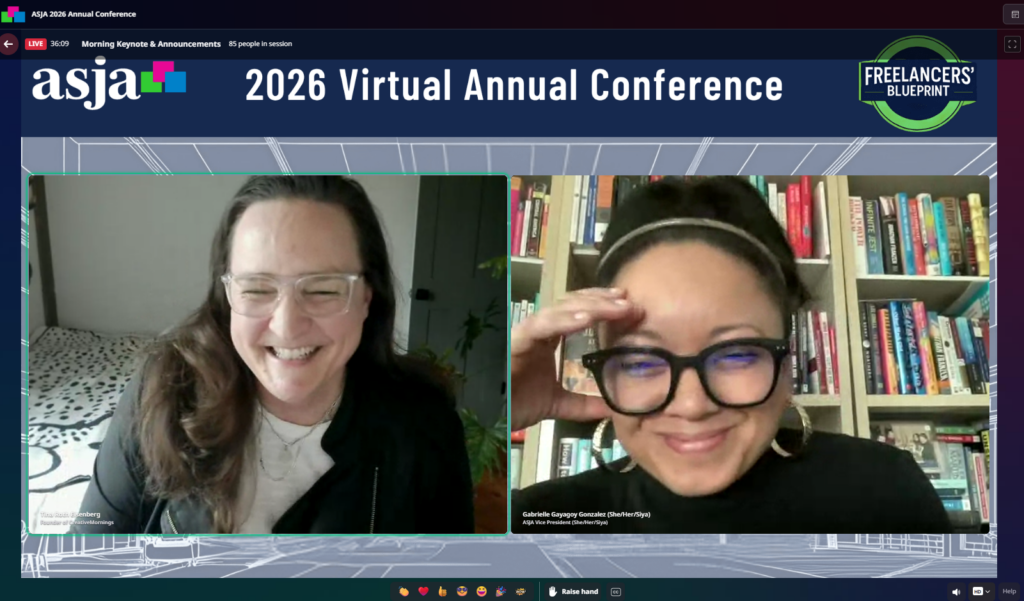
The CreativeMornings founder and keynote speaker for the third and final day of sessions during the 2026 ASJA conference, “Freelancers’ Blueprint: Navigating a Shifting Landscape,” April 20-24, is for a lot of things. Chief among them is community – which has been a recurring theme of this year’s event.
In an enthusiastic and enlightening presentation, Roth Eisenberg highlighted the idea that people can commit to an idea that feels authentic but audacious, and that can be the key to finding your people, building community, and finding joy.
Day three also featured sessions on book adaptations, breaking into writing for non-corporate clients, and marketing tips for writers. The conference continues Thursday, April 23, and Friday, April 24, with Client Connections meetings between ASJA professional members and prospective clients, and opportunities to receive free coaching from experienced writers, editors, and writing coaches.
ASJA announced winners of the 2026 ASJA Awards for articles and content writing. The awards, which honor excellence in nonfiction works published by independent writers in 2025, attracted 500 entries in more than 20 categories, and were reviewed by 70 judges. This year, ASJA added awards for a special category on writing about AI and cultural criticism. See the full list of this year’s winners and honorable mentions with judges’ comments here.
Here’s a recap of selected sessions:
Keynote: Reigniting Creativity Through Community
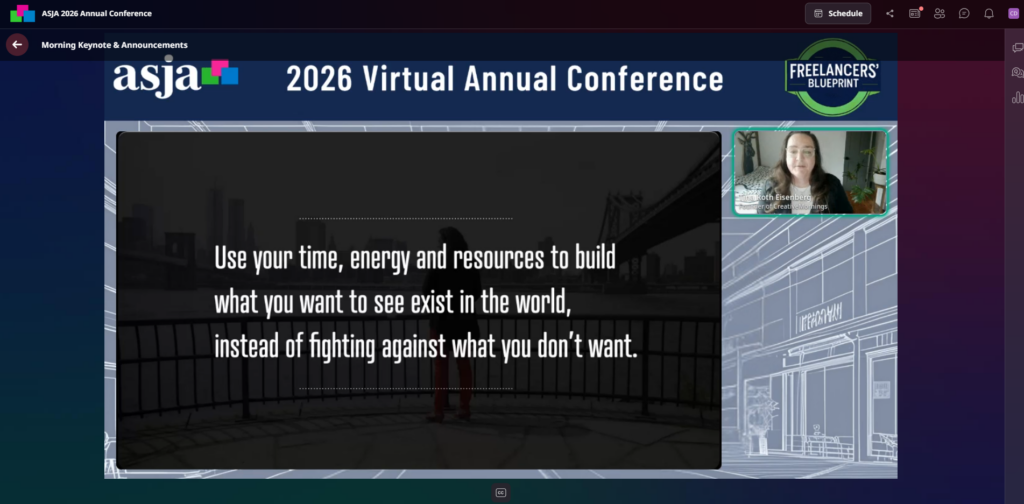
Roth Eisenberg is the founder and CEO of CreativeMornings, the acclaimed breakfast lecture series. Roth Eisenberg left the mountains of Switzerland to move to New York in 1999 and founded the city’s first creative co-working space in 2006.
CreativeMornings is a free monthly lecture hosted in cities around the world, with local events run by volunteers and fueled by generosity—including donated spaces, breakfast, and speaker time. CreativeMornings’ mantra and the source of its popularity and success is “another world is possible,” Roth Eisenberg said.
The Adaptation Journey
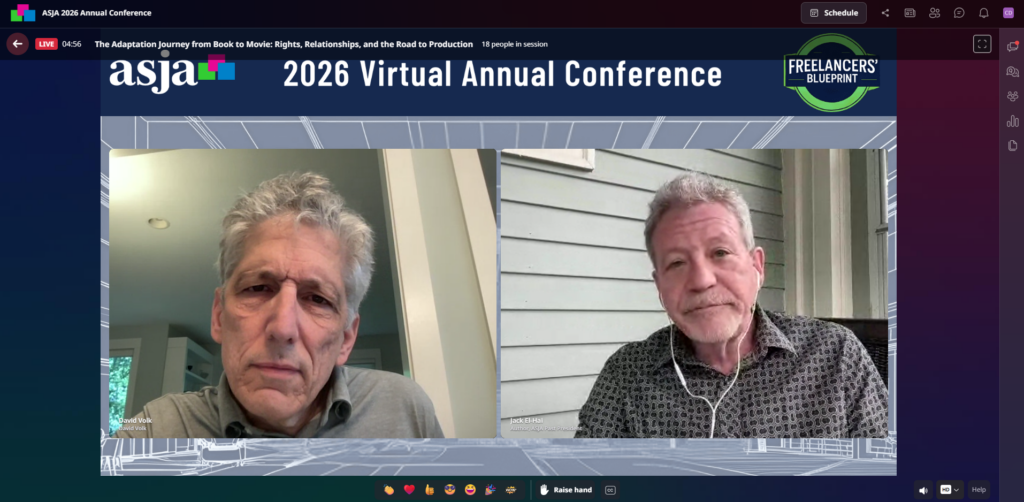
In a session on book adaptations, author, and ASJA member and one-time ASJA President Jack El-Hai reflected on the more than 15 licensing agreements he’s negotiated for his works to be adapted into other media. One of the latest was his book “The Nazi and the Psychiatrist,” which was the basis of the 2025 movie “Nuremberg.”
El-Hai shared best practices for writers who want to develop their own intellectual property (IP) for films, television, documentaries, podcasts and stage plays. Among them: negotiate article and book contracts to retain performance rights, and cultivate long-term relationships with your stories.
He also recommends that writers register copyrights for their IP after its published, noting that it’s possible to bundle articles so oneregistration fee covers multiple works. Registering your copyrighted work paves the way for future conversations about adaptations, since copyright ownership is one of the first questions that will arise. Copyright ownership also protects writers from IP theft, including unauthorized reprints.
An article or book may get optioned but never move beyond that, or options could get exercised but the project never makes it into or out of production, El-Hai said. Writers can still profit because they get paid for each step in the process.
Writers don’t have to and probably shouldn’t navigate these processes alone. Paying a literary agent, performance rights agent, and performance rights attorney pays for itself because it ensures the writer’s IP is properly defended and that they are adequately compensated for options or adaptations.
How do you get your work in front of producers who might want to option it? “Social media the hell out of” your work “to get as many eyes on it as possible,” El-Hai said. Feature stories and radio interviews can also be effective, especially with outlets that have a wide reach.
Breaking Into Writing for Non-Corporate Clients
Many content marketing writers work with companies, but brands aren’t the only entities that need content marketing support. Public relations firms and agencies that work with mission-driven organizations and associations also need content marketing writing support, too.
Many mission-driven organizations and nonprofits rely on freelancers to expand their capabilities. Working with boutique agencies isn’t the only way to find these types of clients. Journalist and ASJA member KJ Bannan recommends using sites like Charity Navigator and nonprofit awards to identify organizations that align with a writer’s niche and check their funding sources before reaching out. Cold outreach can work to find opportunities, but it’s also important to connect with mission-driven orgs through networking and referrals, according to Emily Rogan, a strategic communications leader. If you do opt to send a letter of introduction (LOI), make it quick and to the point.
Other tips and advice shared during the session, which also included Gonzalez, the ASJA vice president, and moderator Sara Murphy:
- Opportunities are strong for writers with a specialty niche whose expertise aligns with an organization. Nonprofits highly value subject matter expertise in freelance writers, so concentrate your efforts on potential clients in your specialty.
- Showcase your personality. Like other content marketing clients, mission-driven organizations want to work with writers they like.
- Marketing your services to nonprofits can be a long game, one that may require multichannel efforts, multiple follow-ups, and lots of patience.
- Familiarize yourself with the types of writing a potential client organization needs, which could include donor communication, annual reports, and profiles and more. Demonstrating how your experience and skills match an organization’s needs may help grab their attention.
The budget constraints many nonprofits are facing could be an opportunity for savvy content marketing writers, Rogan said. Offer to help with demand generation email campaigns and targeted blogs that orgs can use in paid ad campaigns. Organizations that are struggling with funding may be willing to invest in freelance writing projects that can help them raise revenue. Small startups doing mission-driven work also fall into this category.
Building a Multimedia Content Marketing Campaign
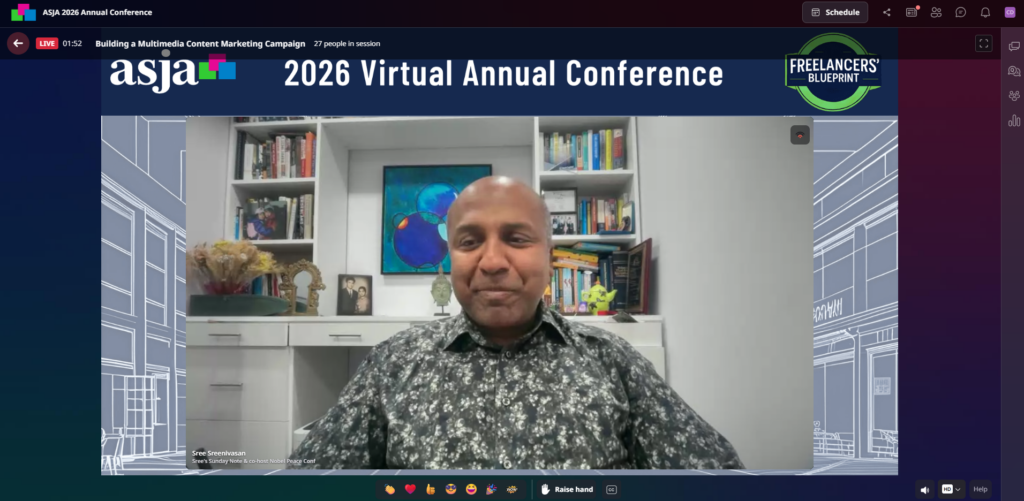
To stand out today, writers need to apply the same nuts and bolts of modern marketing campaigns to promoting their own work. Who better to explain how that’s done than digital media expert Sree Sreenivasan. In his day three session, the author of Sree’s Notes, one-time CEO and cofounder of Digimentors, and former Chief Digital Officer of NYC, the New York Metropolitan Art Museum, and Columbia University, drew on decades of experience teaching journalists to use the internet to explain how writers can amplify their work in the age of online audiences and AI algorithms.
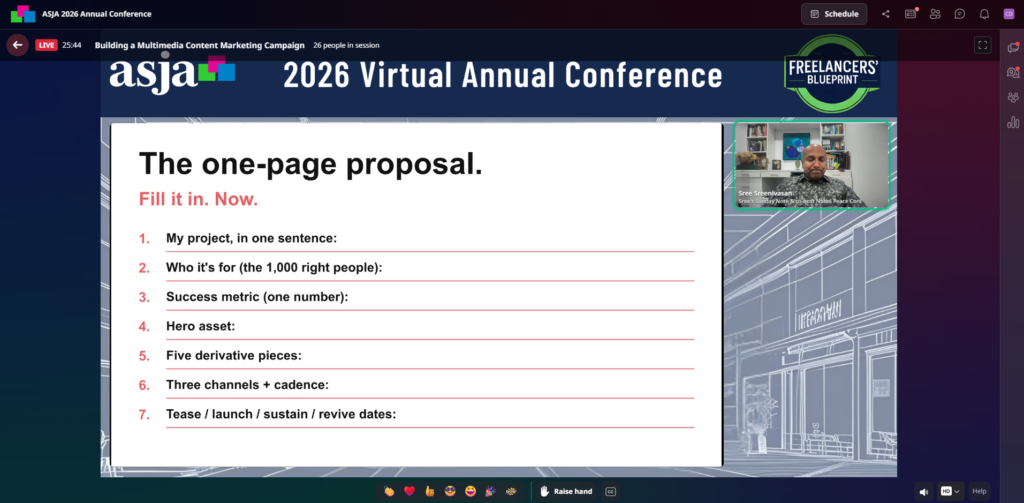
Promoting yourself starts with evaluating opportunities and exploring promotional strategies, Sreenivasan said. When promoting yourself, a crucial first step is determining how to turn one idea into a multitude of content assets. A book or a longform content piece can be spun off into an op-ed about the story’s inspiration, teaser social content, an infographic of key data, email drip campaigns, and other content teeing up your launch. After publication, this strategy continues with updates and follow-ups, events, explainer videos, etc.
Sree’s top tips for promoting yourself on LinkedIn:
- Don’t put links in your main post. Use text and a graphic in the main posts and put the link in the comments.
- Avoid editing posts after publishing. Edited posts are suppressed in the algorithm.
- When studying metrics, focus on replies rather than follower counts.
He shared a proposal template writers can use to create a project outline. The seven-prompt exercise can be applied to different project types, including ebooks and YouTube videos.
A word of warning: creating and executing content marketing campaigns will add work to your plate and writers who produce work more frequently may find that challenging.
To stay up to speed with ASJA news and events, subscribe to the ASJA Weekly newsletter, read the ASJA Confidential blog, or follow ASJA on Facebook or LinkedIn.
***
Cat DiStasio is a freelance content marketing writer and journalist based in Oregon. Her content work focuses on working with growing brands on human resources technology, trends, and research, as well as B2B technology topics such as AI and energy and green tech. She is a former HR practitioner and technical recruiter who has tracked workplace tech trends for more than 20 years. Connect with her on LinkedIn or visit her website.
Browse Articles
Topic
Craft & Writing Skills, Marketing, Running Your Business, Tips, ASJA, Book Publishing, Content Marketing, contracts